UAE Home Furniture Market Size, Trends, and Forecast (2026–2032)

The UAE
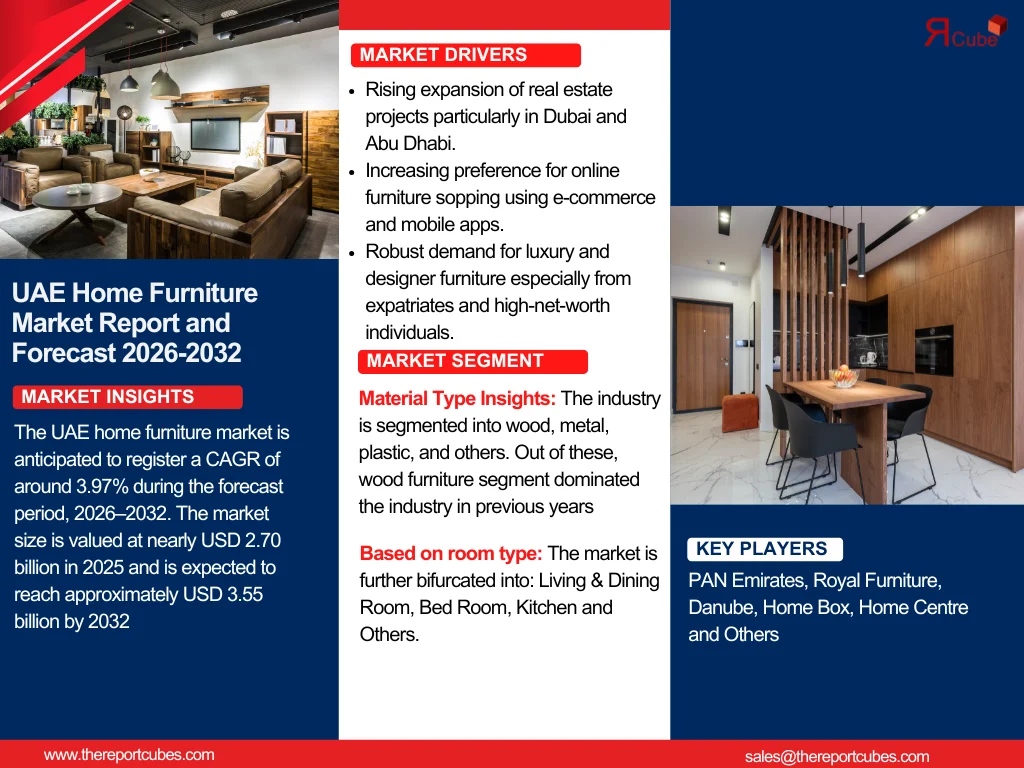
home furniture market Size is
witnessing steady expansion, fueled by rapid urbanization, a rising expatriate
population, and increasing consumer preference for stylish, sustainable, and
technology-enabled living spaces. Valued at USD 2.70 billion in 2025,
the market is projected to reach USD 3.55 billion by 2032, registering a
compound annual growth rate (CAGR) of 3.97% during the forecast period
(2026–2032). This growth reflects not only the demand for premium furniture but
also the evolving lifestyle choices of UAE residents who are investing in both
functionality and aesthetics.
Market Dynamics
Key Growth Drivers
- Urbanization and Real Estate
Expansion
The rise in housing developments, luxury villas, and high-rise apartments continues to push the demand for modern and modular furniture. Developers are also emphasizing interior aesthetics, encouraging higher spending on furniture. - Rising Disposable Income
An affluent consumer base in the UAE, coupled with growing middle-class purchasing power, is driving sales of both luxury and mid-range home furniture. Shoppers are increasingly shifting toward branded and customized solutions. - Smart and Sustainable Homes
The trend toward eco-friendly furniture and integration of smart home technologies is reshaping the market. Consumers are exploring sustainable raw materials such as bamboo and engineered wood, while furniture integrated with smart features (AI-based customization, AR/VR shopping tools) is gaining popularity.
Opportunities in the Market
- Sustainable Furniture
With sustainability at the core of UAE’s development vision, eco-friendly furniture crafted from renewable materials presents a significant opportunity. Companies investing in green certifications and circular economy practices are likely to gain an edge. - Rental and Subscription
Models
The large expatriate population and younger demographics are creating demand for furniture rental services. Subscription models that offer flexibility and affordability are appealing to transient residents and students. - E-Commerce Growth
Online platforms are becoming a key sales channel. The integration of virtual showrooms, AR-based visualization, and contactless delivery services are fueling digital adoption across the home furniture segment.
Market Challenges
Despite
positive growth, the UAE furniture market faces challenges:
- Intense Competition: International brands,
regional players, and local manufacturers compete aggressively, leading to
price wars in the mid-range segment.
- High Import Dependence: A significant portion of
furniture in the UAE is imported, making the market vulnerable to supply
chain disruptions and fluctuations in global raw material prices.
- Price Sensitivity: While luxury furniture
thrives, the cost-conscious consumer base often seeks affordable
alternatives, pressuring margins for mid-tier brands.
Segmentation Analysis
By Material
- Wood continues to dominate the
market owing to its durability, premium appeal, and versatility across
product categories.
- Metal furniture is witnessing growing
demand, particularly in modern, minimalist designs for urban apartments.
By Room Type
- Living and dining room
furniture
accounts for the largest market share, as consumers prioritize communal
spaces for aesthetics and functionality.
- Bedroom furniture remains a steady growth
segment, driven by increasing apartment handovers in major cities like
Dubai and Abu Dhabi.
Competitive Landscape
The UAE
home furniture market is highly fragmented, with both international and
regional players competing for market share. Key companies include:
- IKEA – expanding its footprint
with a new outlet at City Centre Fujairah in 2024.
- Home Centre and Home Box – strong presence across
retail chains with affordable solutions.
- PAN Emirates and Royal
Furniture –
catering to the mid-range and premium furniture categories.
- Danube Home – leveraging e-commerce and
physical showrooms to strengthen brand positioning.
Players
are focusing on customization, sustainability, and digital platforms to
meet the evolving consumer preferences. Strategic collaborations with real
estate developers and interior designers are also emerging as a common trend.
Regulatory Landscape
The UAE
government’s focus on sustainability, green construction, and waste reduction
directly impacts the furniture industry. Policies encouraging sustainable
sourcing of materials and eco-friendly manufacturing processes are
influencing consumer choices as well as corporate strategies. Additionally,
initiatives under the UAE Vision 2030 emphasize smart cities and
energy-efficient living, creating long-term growth prospects for home furniture
aligned with these goals.
Outlook
Looking
ahead, the UAE home furniture market will continue to evolve as consumers
demand a blend of luxury, sustainability, and digital innovation. While
competition will remain intense, companies that successfully adapt to eco-friendly
practices, online retail transformation, and flexible ownership models will
strengthen their position.
By 2032,
the market’s transformation will not just be about size—it will be about how
brands align themselves with sustainability, innovation, and lifestyle
aspirations of UAE residents.


Comments
Post a Comment